The European Wine Tariff Is Here. What to Buy Before Prices Jump.
A 15% tariff on European imports is already reshaping the wine wall. Here is what is going up, what to stock, and the three bottles I am buying by the case this week.

The 15% tariff on European wine imports is now active, and the three-tier distribution system amplifies that cost into 25-50% retail price increases on French, Italian, and Spanish bottles by mid-2026. Smart collectors are buying European wines now at pre-tariff prices, especially Bordeaux, Barolo, and Rioja, where the value gap is about to close dramatically.
What happened
I got three calls last week from clients asking the same question. Should I still be buying European wine? The answer is yes. But the math changed. A 15% tariff on every bottle of French, Italian, Spanish, German, and Portuguese wine entering this country is now active. That number sounds manageable until you understand how the money actually moves.
Wine does not go from vineyard to your glass. It goes from vineyard to importer to distributor to retailer to your glass. Three middlemen. Every one of them takes a cut. So that 15% at the border becomes 25-50% by the time it hits the shelf at your local shop. A $40 Bordeaux becomes a $55 Bordeaux. A $25 Rioja becomes a $35 Rioja. I watched it happen in real time at a shop in Austin last Tuesday. Same bottle, new sticker. Nobody announced it.
Why the timeline matters
Here is what most people do not realize. The bottles on shelves right now were imported before the tariff hit. Old inventory. Old prices. Your shop bought that stock months ago at the lower duty rate. When it sells through, the next shipment comes in at the new cost. That swap is happening right now. Quietly. Bottle by bottle. Some shops have already repriced. Most have not. The window is open but it is not going to stay open.
If you have been meaning to stock your cellar with European wine, the next 60 days are the time to do it. Not because the wines will get worse. Because the same bottles will cost meaningfully more by July.
Who gets hit hardest
France. Obviously. Bordeaux, Burgundy, Champagne, the Rhone. Those four fill more cellar racks in this country than anything else, and all four are about to get more expensive. I built a cellar in Westlake last month where half the collection was Champagne. That client is about to watch entry-level non-vintage cross $80 a bottle. It was $55 a year ago. That stings.
Italy is next. Barolo, Brunello, Chianti Classico, Amarone. I have been telling people for years that Italian wine is the best deal in the world. World-class quality at prices that made no sense. Part of that was the exchange rate. Part of it was low tariffs. One of those just broke.
Spain might hurt the most. Spanish wine has been absurdly underpriced for years and everyone in the industry knew it. You could buy a Rioja Reserva with three years of oak aging for $22. Twenty-two dollars. For a wine that would cost $50 if it came from Napa and did not spend a single day in barrel. The tariff pushes that $22 bottle to $33 and suddenly it is competing with California wines that have half the complexity and none of the patience. The magic trick stops working.

What I am doing about it
I am not panicking. I am buying. There is a difference. The tariff does not change what is in the bottle. It changes what is on the price tag. If a wine was worth $40 last month it is still worth $40 this month. It just costs $55 now. So the play is obvious: buy what you love at the old price while you still can.
Three bottles. Three countries. Three price points. All three are sitting on shelves right now at the old price if you know where to look. All three will cost meaningfully more within 90 days. I bought a case of each on Monday. Here is why.
The Bordeaux: Château Phélan Ségur 2020
Saint-Estèphe. Left Bank. Dark cassis, graphite, cedar. The kind of structured claret that makes you understand why people have been cellaring Bordeaux for centuries. Phélan Ségur is not a classified growth but it sits between two of them and tastes like it belongs. At $40-55 right now, this is one of the last great Bordeaux values. The tariff pushes it past $60. At that point you are paying Napa Cab prices for a wine that needs a decade to peak. The economics only work at the current price.
Château Phélan Ségur Saint-Estèphe 2020 — why this unclassified Bordeaux drinks like it should have made the 1855 list.
See Beckett's PickThe Barolo: Vietti Castiglione 2020
Vietti is one of the great names in Piedmont. The Castiglione is their communale Barolo. Multi-vineyard blend, rose petal, tar, dried cherry, iron. It is the best introduction to serious Barolo you can buy and at $50-65 it was already a steal. The tariff moves it toward $75-80, which puts it in single-vineyard territory where it has to compete with wines that have more specificity. Buy it now while it occupies the sweet spot: serious Barolo, accessible price.
Vietti Barolo Castiglione 2020 — the entry-level Barolo from one of Piedmont's greatest estates.
See Beckett's PickThe Rioja: Bodegas Muga Reserva 2020
This is the one that hurts the most. Muga Reserva at $20-28 was one of the most absurd deals in wine. Traditional Rioja, 26 months in oak, dark cherry, vanilla, leather, spice. The kind of wine that costs $50 from California and $70 from Burgundy. The tariff moves it to $33-36. Still a good wine at that price. But the gap between what it costs and what it is worth shrinks, and that gap was the whole point. Buy the case now. Thank me later.
Bodegas Muga Reserva 2020 — the $25 Rioja that tastes like it should cost twice as much. And soon might.
See Beckett's Pick
The bigger picture
Tariffs come and go. They get negotiated, adjusted, sometimes reversed. I have seen it before. This one might not be permanent. But the pricing adjustment in the meantime is real. Your distributor is not going to eat a 15% cost increase out of generosity. Neither is your wine shop. That cost rolls downhill. And you are at the bottom.
The silver lining. I have been putting Portuguese wine in client cellars for two years now. Touriga Nacional from the Douro that drinks like $60 Rhone for $20. Greek Assyrtiko. South African Chenin Blanc. Argentine Malbec that outperforms Napa Cab at a third of the price. If you have been meaning to explore beyond France, Italy, and Spain, the tariff just gave your wallet a reason to catch up with your curiosity.
But do not abandon Europe. I am not. The wines are too good and the history behind them is too deep to walk away from because of a tax. Just be smart about timing. Buy the bottles you know you love at the prices you know are fair. Fill that rack now. When someone walks into your cellar two years from now and sees a case of 2020 Bordeaux you bought at $45, you will look like the smartest person in the room.
“A tariff changes the price tag. It does not change what is in the bottle.”
— Beckett Stone
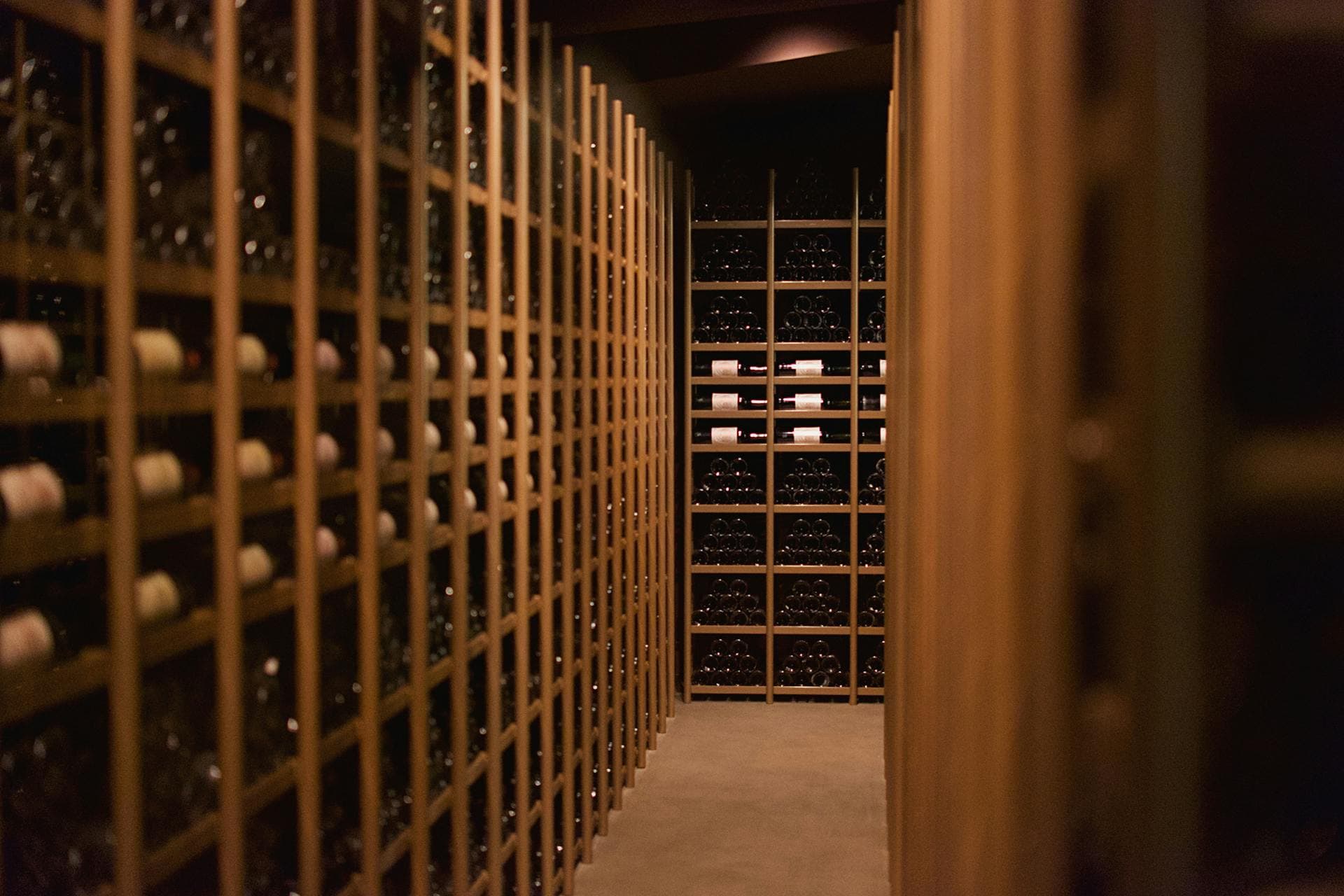
A well-designed cellar protects your collection from temperature, humidity, and bad timing. Whether you are stocking up before a tariff or aging bottles for a decade, the room matters as much as the wine.
Book Consultation