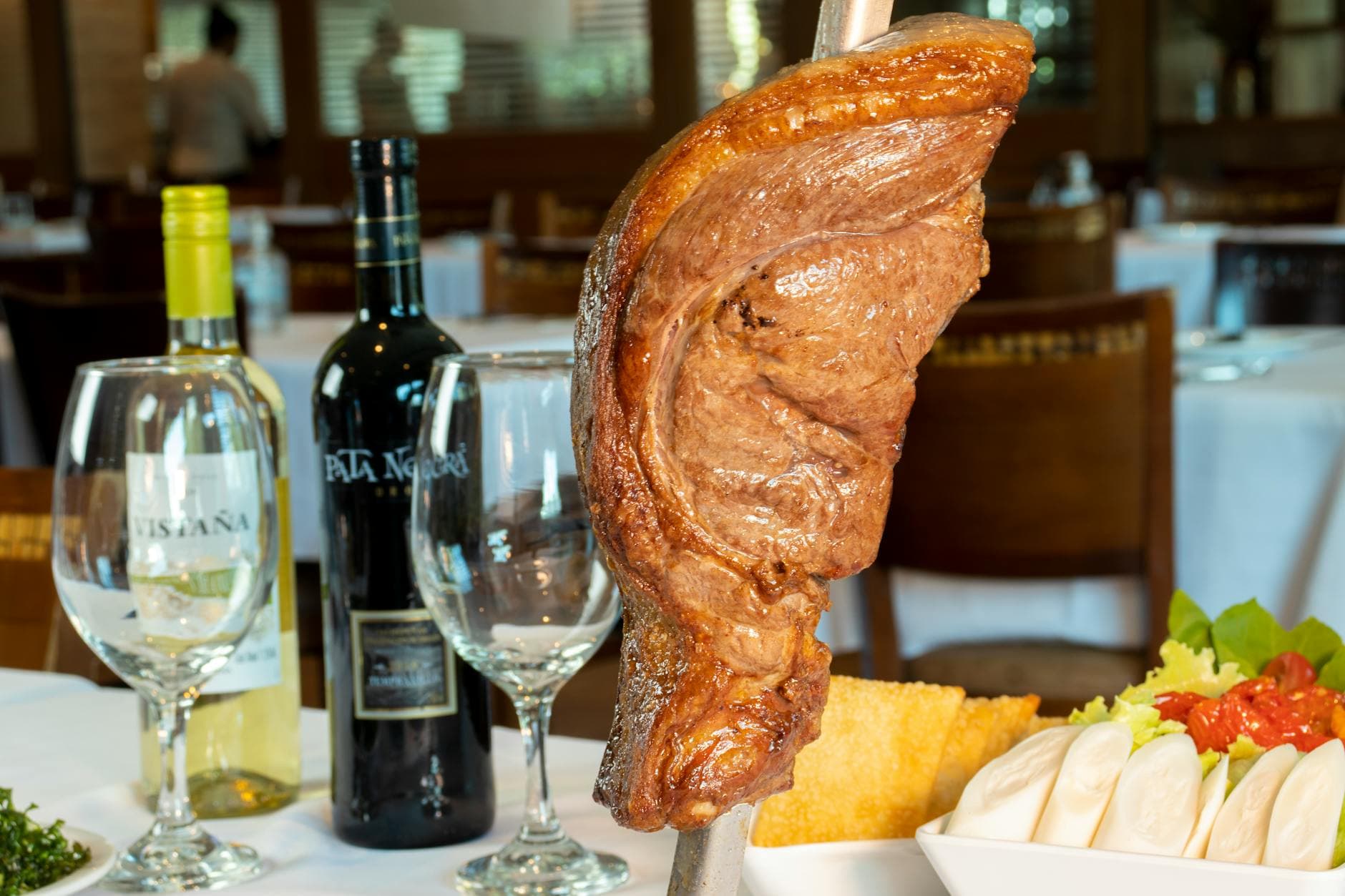
What Wine Goes With Steak
Cut by cut, sauce by sauce, dollar by dollar — the pairing guide that actually tells you what to open.

The best wine with steak depends on the cut. Ribeye wants big tannic reds like Cabernet Sauvignon or Malbec — the fat softens the tannins and the tannins cut the fat. Filet mignon pairs better with Pinot Noir or Merlot because the lean texture gets overwhelmed by monster Cabs. NY strip is the middle ground — Tempranillo, Sangiovese, or Cabernet blends. The science is simple: meat proteins bind to wine tannins, sparing your palate from astringency and making both the wine and the steak taste better.
Why it works
Before we get to bottles, you should understand why red wine and steak are not just tradition — they are chemistry. When you eat steak, the meat's proteins act as molecular sponges for wine tannins. Normally tannins bind to the proteins in your saliva, creating that drying, astringent sensation. But when steak protein is present, the tannins bind to the food proteins instead, sparing your palate. The wine tastes smoother. The steak tastes richer. They literally complete each other at a molecular level.
Fat plays a role too. The lipids in a well-marbled cut coat your palate and further buffer tannin astringency. This is why a heavily marbled ribeye can handle a much more tannic wine than a lean filet mignon. The fat and tannin cancel each other out — the drying tannin meets the coating fat and both disappear. This is not poetry. This is protein chemistry. And it is why sommeliers have been pairing red wine with red meat for centuries.
Ribeye — bring the big guns
Ribeye has the highest marbling of the major cuts. All that intramuscular fat demands a wine with enough tannin to cut through it — Cabernet Sauvignon, Malbec, Syrah. Grilled ribeye especially wants smoke-friendly wines because the char from the Maillard reaction creates bitter and smoky compounds that harmonize with oak-aged reds. They share actual flavor compounds — vanillin and guaiacol — which is why a grilled ribeye and a barrel-aged Cab feel like they were made for each other. Because they were.
My go-to: Catena Malbec from Mendoza, about $18. High-altitude Malbec from 3,000-plus feet has naturally higher acidity that cuts through marbled fat better than sea-level fruit. If you are grilling with chimichurri, this is the answer. For a celebration ribeye, open a Stag's Leap Artemis Cabernet ($55) or Silver Oak Alexander Valley ($80). These are the bottles the steak deserves.
Filet mignon — finesse, not power
Filet is the leanest major cut and the most tender. It does not need a wine that fights it — it needs one that matches its refinement. Pinot Noir is the classic pairing and it is classic for a reason. The red berry notes and subtle earthiness mirror the filet's clean flavor without overwhelming the texture. Merlot works too — the soft tannins match the soft meat.
Louis Jadot Bourgogne Pinot Noir ($18) is the everyday play here. E. Guigal Côtes du Rhône ($14) is another — Grenache-led, medium body, enough structure for the steak without steamrolling it. If the filet has a béarnaise or butter sauce, you can even reach for a rich Chardonnay. The fat in the sauce opens the door to white wine. Nobody expects it. It works.
NY strip — the middle ground
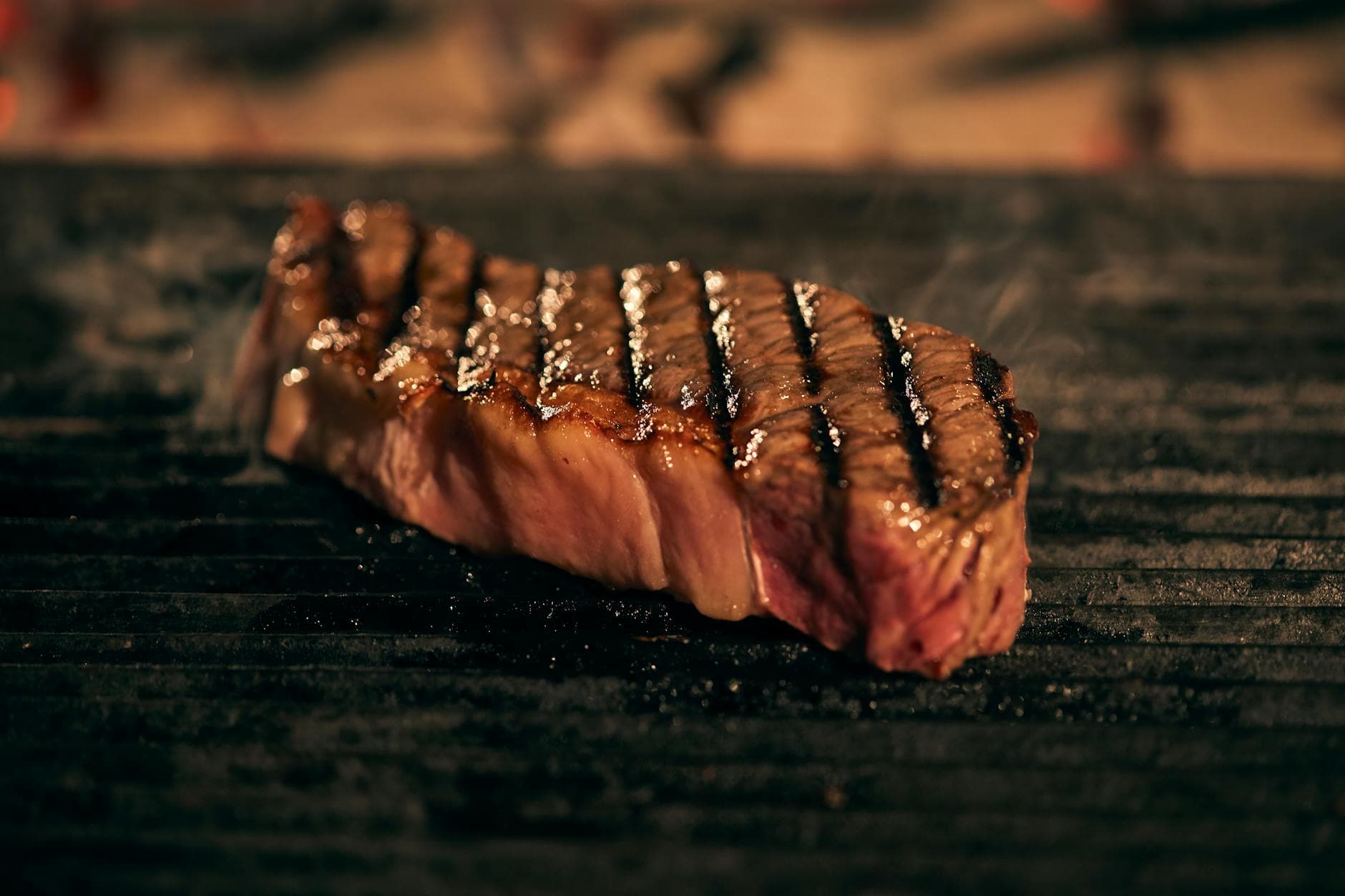
New York strip has moderate marbling and a clean, beefy flavor that sits right between ribeye and filet. This is the most versatile steak for wine because it can go in either direction — structured enough for a Cabernet blend, refined enough for a Tempranillo or Sangiovese. A Rioja Reserva like Campo Viejo ($14) is outstanding here. So is a Chianti Classico Riserva. These are wines built for food, not for scoring points.
Tomahawk — the performance bottle
Tomahawk is a bone-in ribeye, same pairing logic, but this is a showpiece cut — you serve it when you want to make an impression. Match it with a performance bottle. This is when you open the Napa Cab or the Barolo. Silver Oak, Caymus Special Selection, a good Brunello. The tomahawk is theater. The wine should match the energy.
What about the sauce
- Peppercorn sauce — Syrah or Shiraz. They share the same peppery compound (rotundone). The match is scientific.
- Chimichurri — Argentine Malbec. Regional harmony. The herbs in the sauce and the terroir in the wine grew up in the same place.
- Red wine reduction — match the wine you used in the sauce, or go one tier up in quality.
- Blue cheese crust — big tannic reds. The salt and funk of the cheese need tannin as a counterweight.
- Béarnaise or butter — you can go white here. A rich Burgundy Chardonnay handles butter-sauced filet beautifully.
The mistakes people make
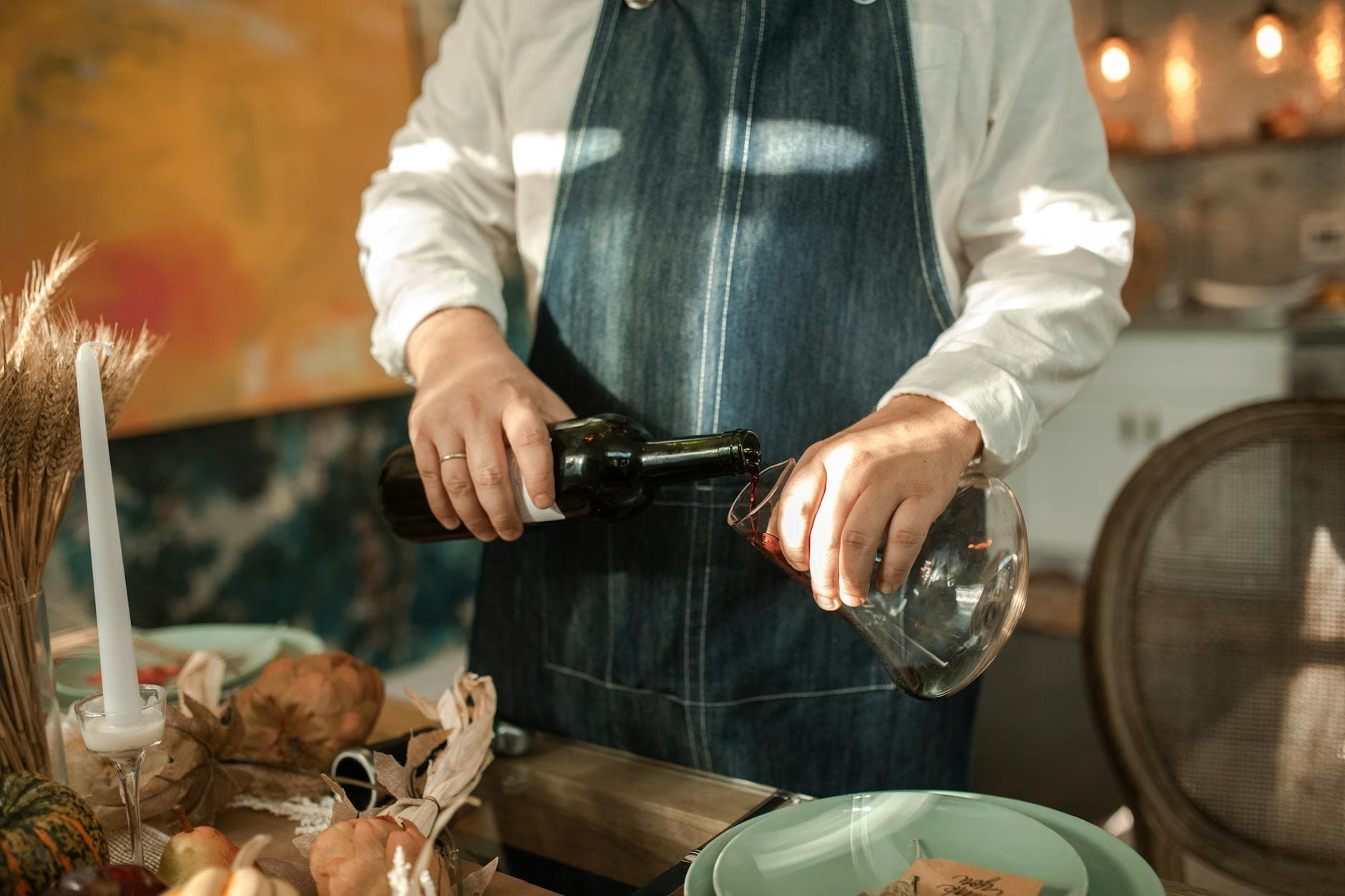
The biggest one: pulling a $60 Cab out of a 72-degree kitchen and pouring it at room temperature. That wine is flabby and hot. Twenty minutes in the fridge before you pull the steak off the grill. You want 62-65 degrees, not 72. The second mistake: not decanting. Young tannic reds need 30 minutes of air. The tannins soften, secondary aromas open up. Pour the wine while the coals are getting hot. By the time you sit down, both the steak and the wine are ready.
The third mistake is overthinking it. Any decent red wine with any decent steak is going to be a good experience. The chemistry does most of the work for you. You are just optimizing, not inventing. Open something you like. Cook the steak right. The rest takes care of itself.
A well-stocked cellar means you always have the right bottle for the right cut. We design custom wine storage that keeps your collection at perfect serving temperature.
Book Consultation