This Dead Space Became the Best Room in the House
A passive under-stairs wine cellar in the hills of West Austin. No cooling unit. No wasted square footage. Just polished chrome, Starphire glass, and a collection that stops every guest at the door.

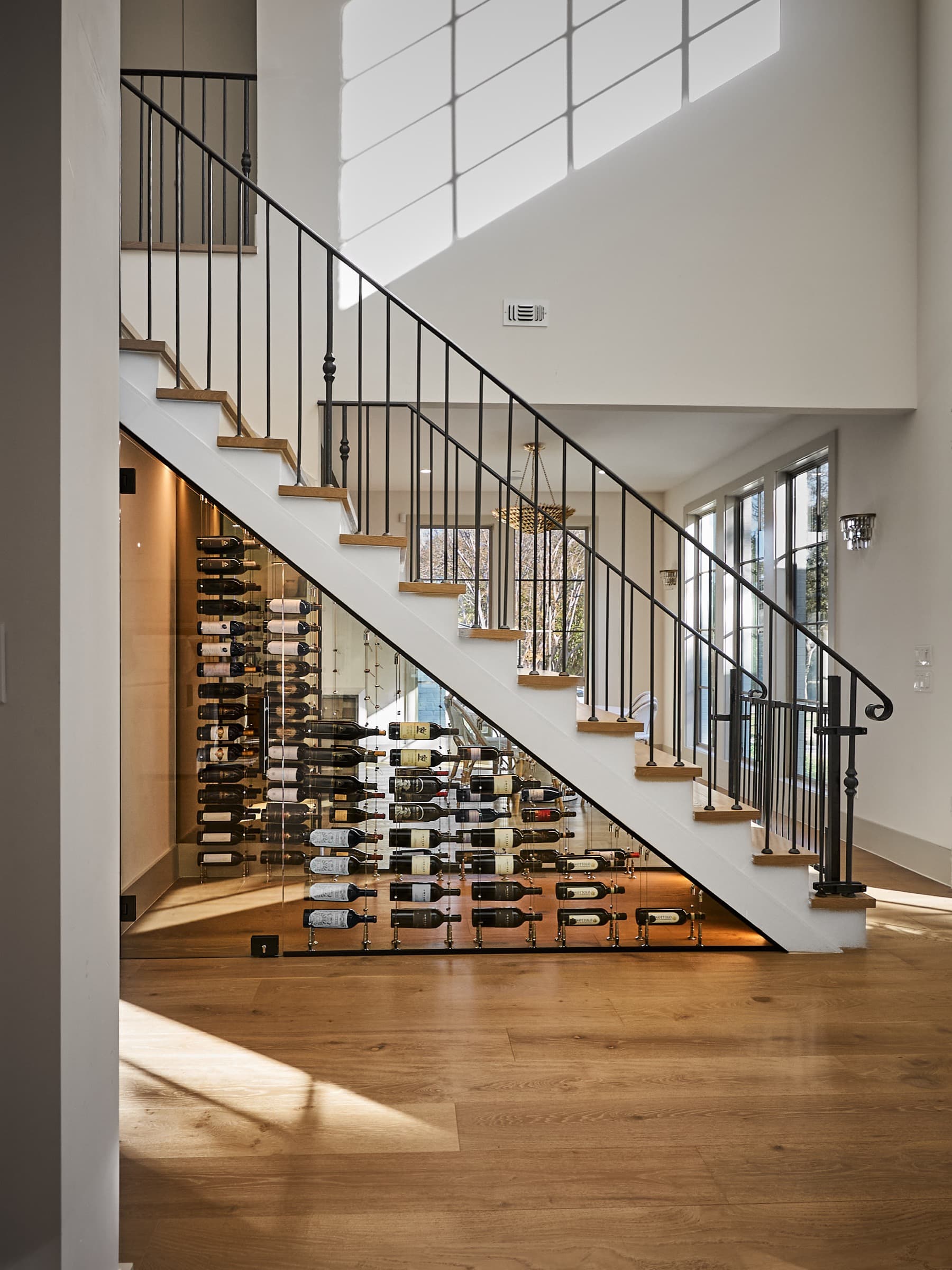
In the hills of West Austin, Bijou transformed the dead space under a grand staircase into a passive wine cellar. No cooling unit needed. Polished chrome cable racks behind half-inch Starphire ultra-clear glass trimmed in matte black, backed by a bronze mirror that doubles the visual depth. It holds roughly 150 bottles and costs nothing to run.
Every house has one of these spaces
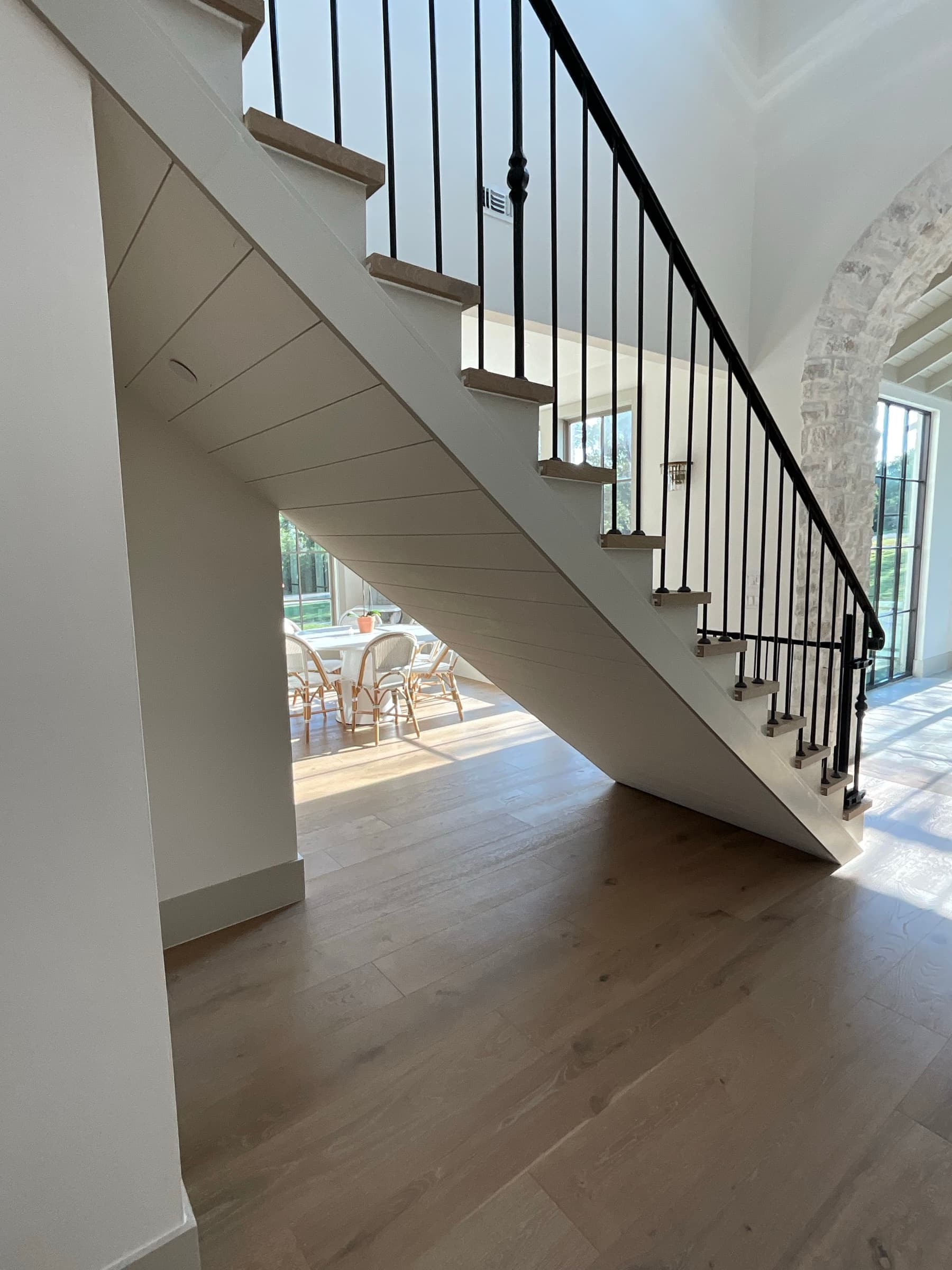
Under the stairs. You walk past it a hundred times a day and never think about it. Maybe there is a closet door. Maybe there is not even that. Just drywall and dead air. In a luxury estate in the hills of West Austin, it was exactly that. Wasted geometry beneath a grand staircase with iron balusters, wood treads, and two stories of natural light pouring through the windows above.
The family wanted to do something with it. We did.
What we built
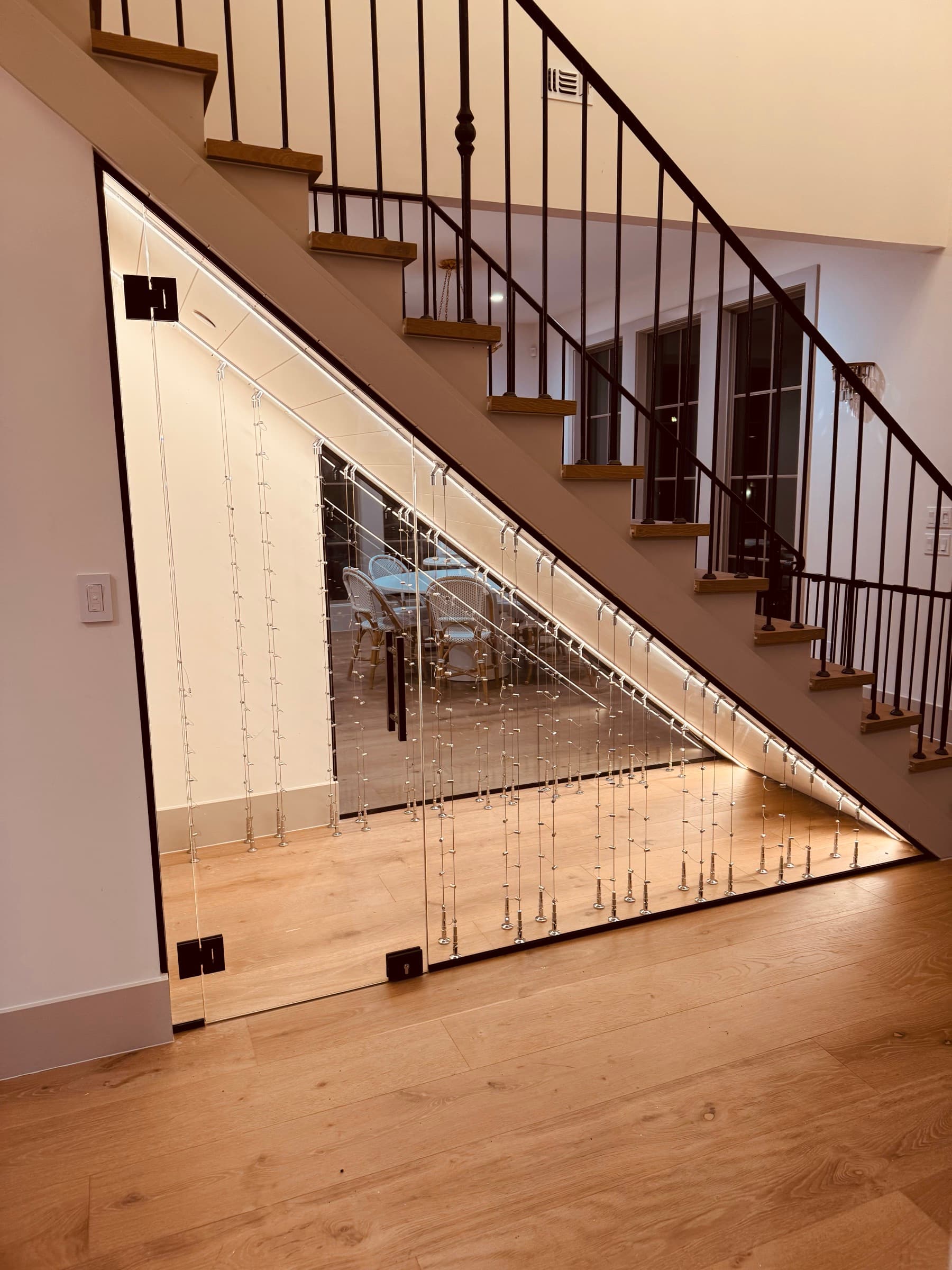
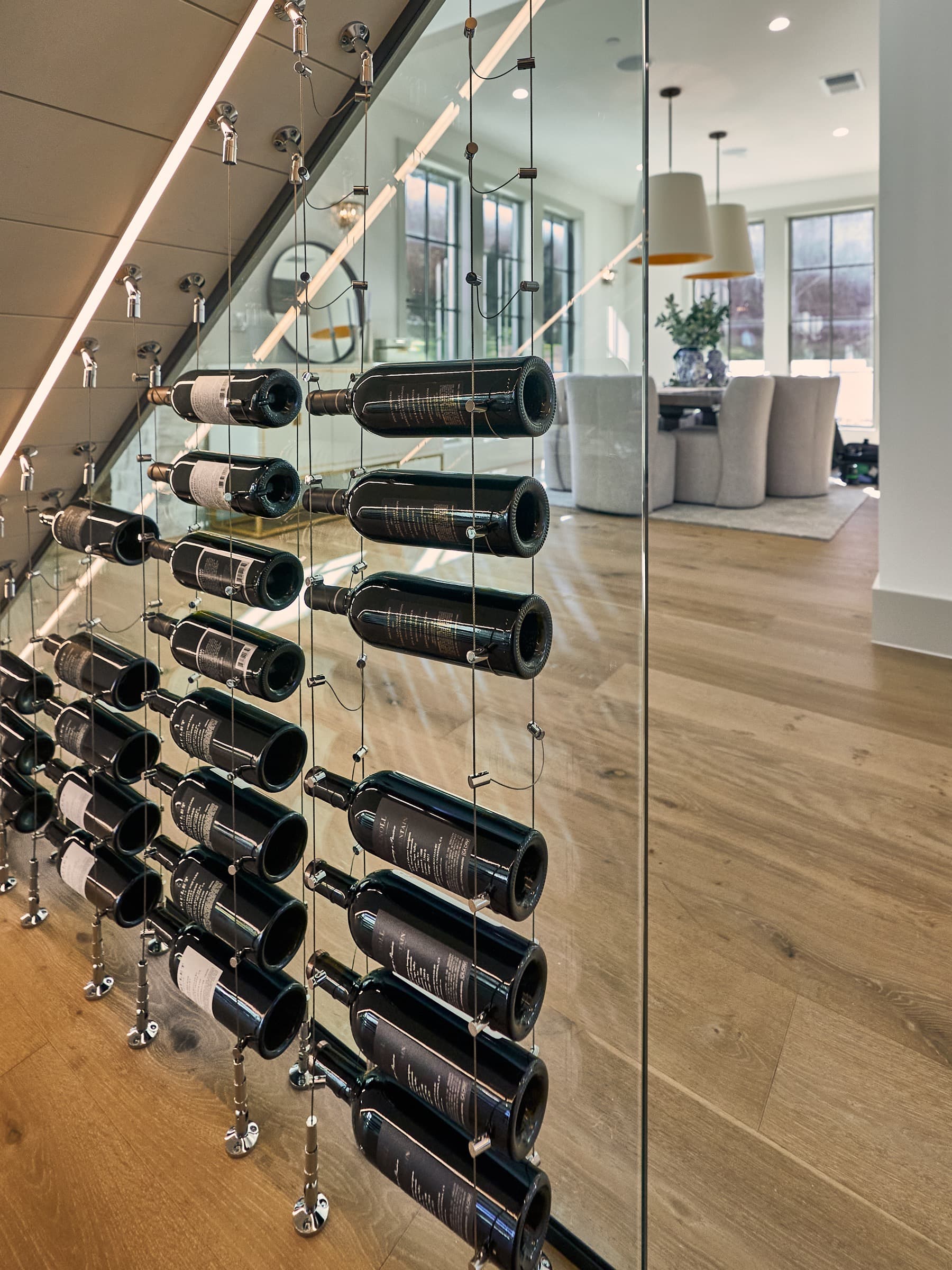
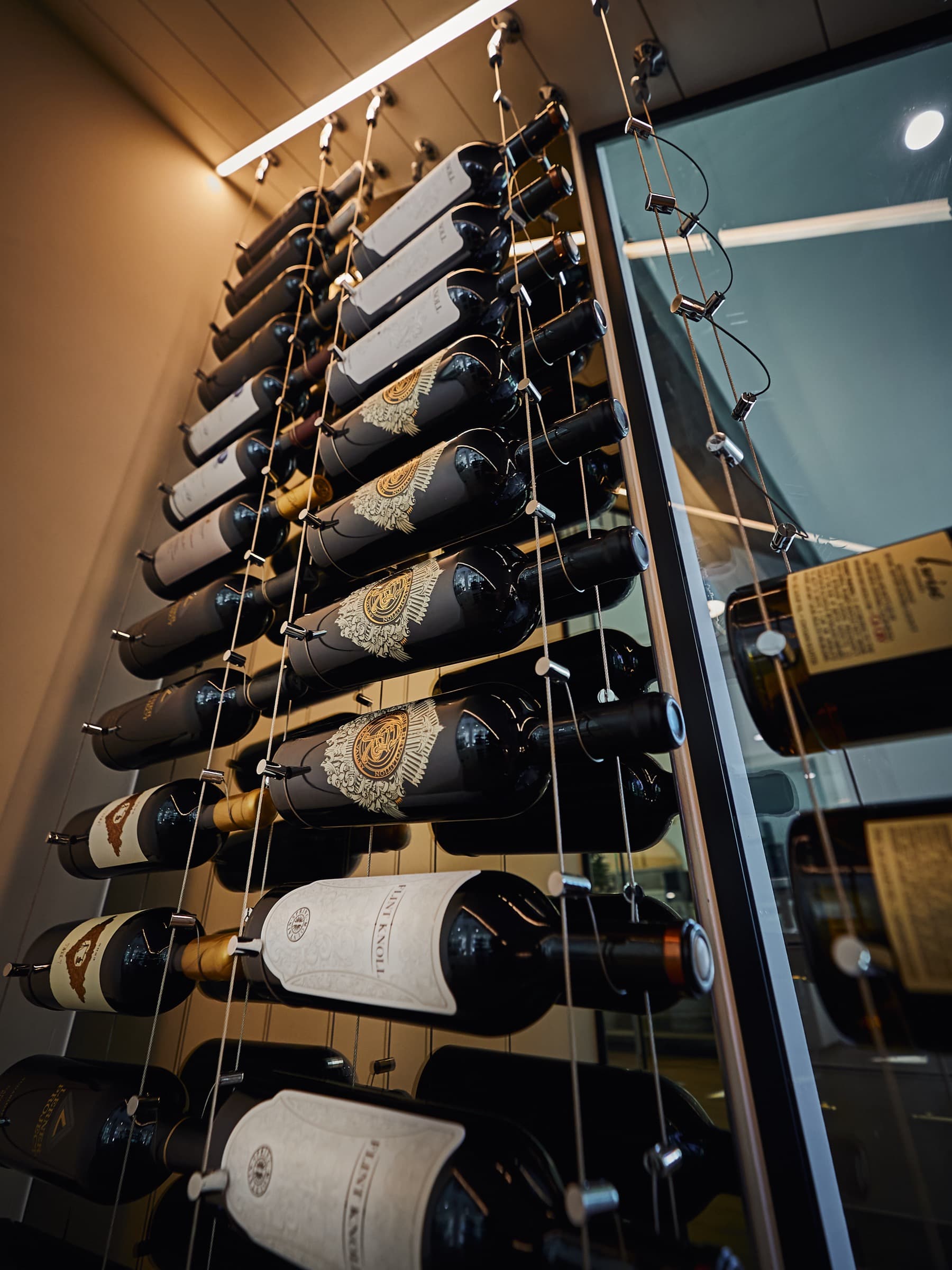
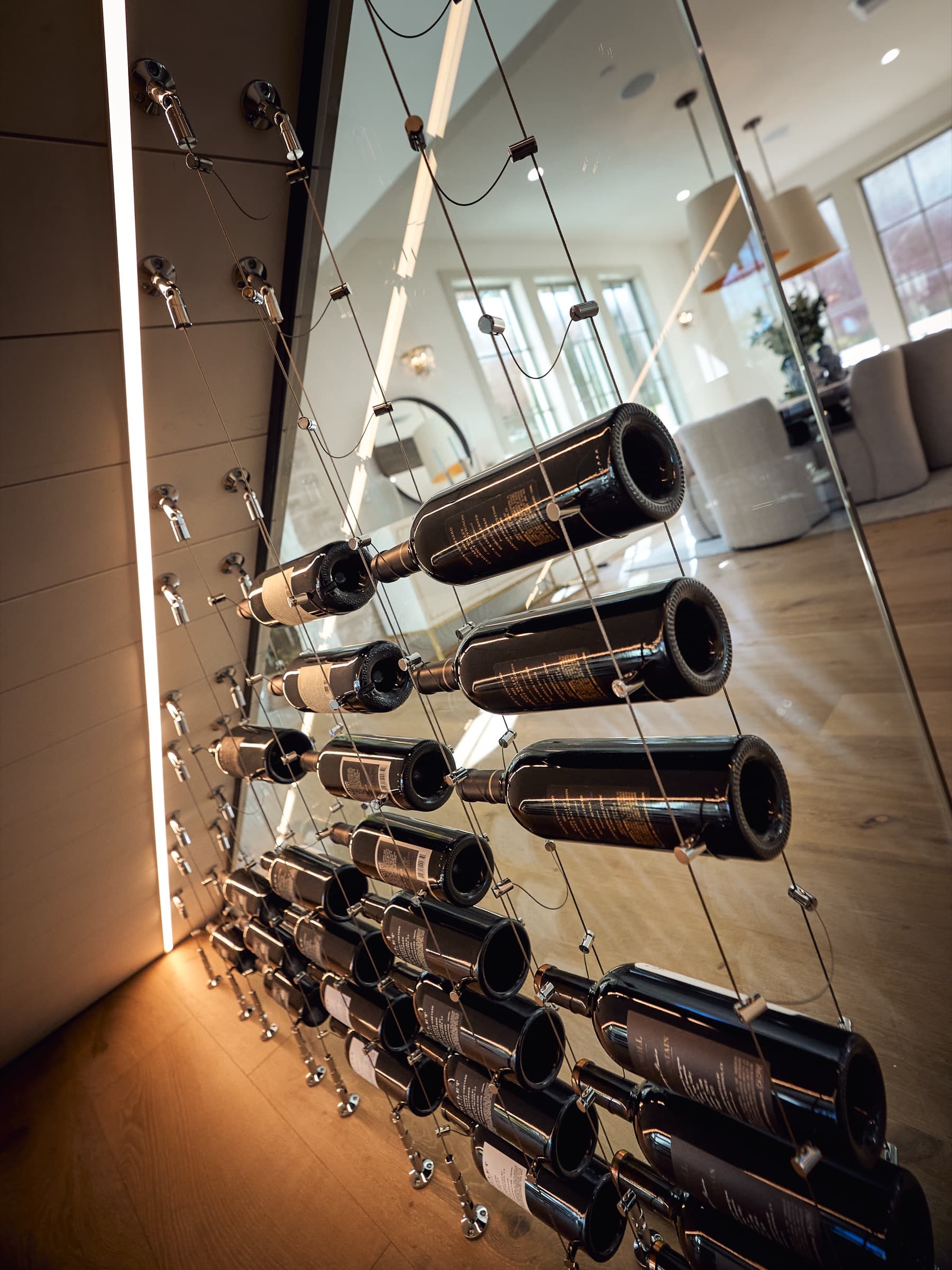
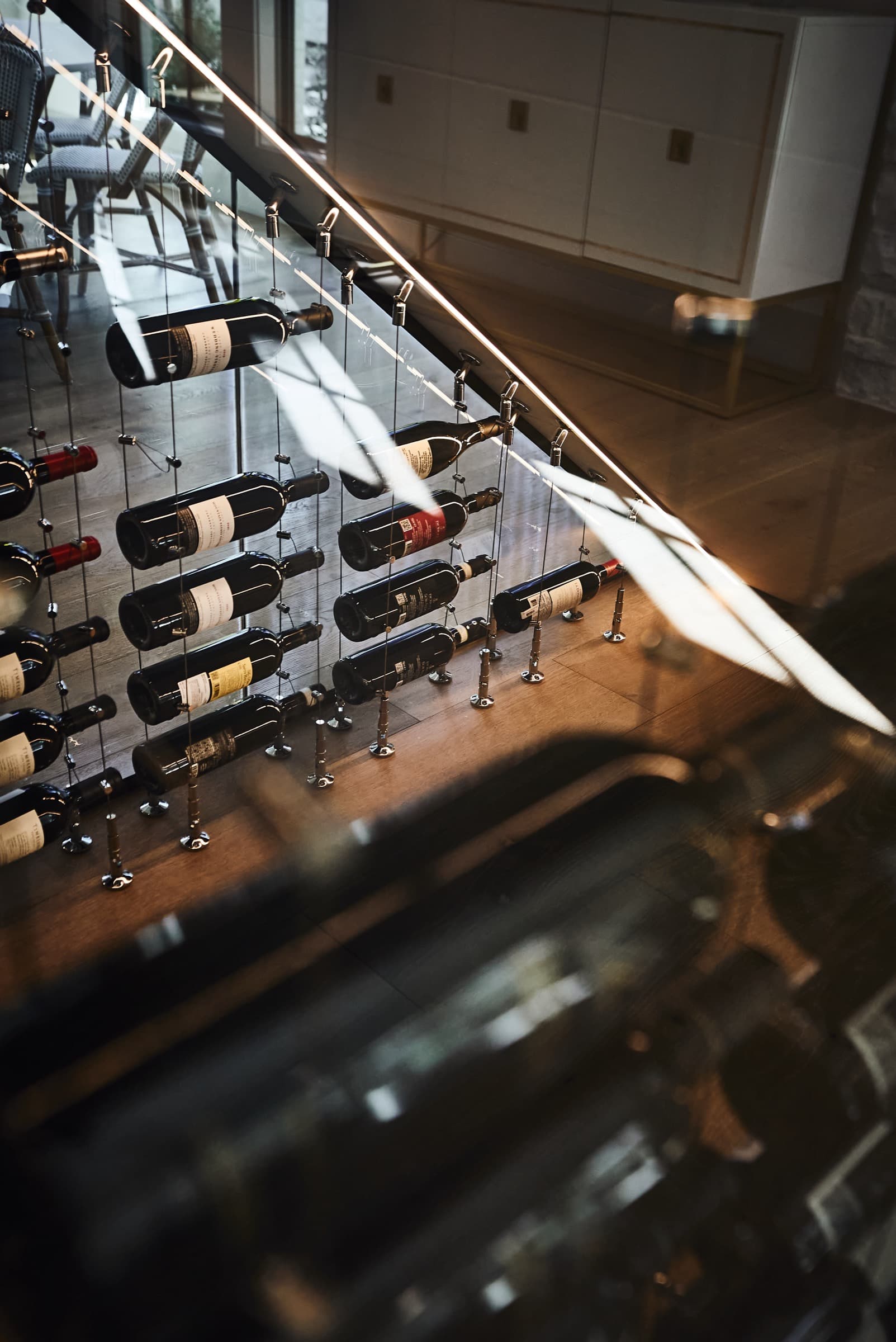
Polished chrome cable racks running the full triangular geometry of the staircase. Bottles follow the angle of the stairs, more at the base where the ceiling is highest, tapering as the stair descends. Half-inch Starphire ultra-clear glass encloses the entire space, trimmed in matte black hardware. Behind the bottles, a bronze mirror doubles the visual depth of the collection without adding a single square foot.
Recessed dimmable track lighting washes down from above. At full brightness the cellar is a showpiece. Dimmed low at night it glows like a lantern inside the stairwell.
Roughly 150 bottles. The collection in there right now is serious. Flint Knoll, Lerner Project, some beautiful Napa Cabernets that tell you the family knows what they are drinking.
Why passive works here
No cooling unit. None. This is a passive cellar. Meaning the space stays within a wine-safe temperature range on its own.
How? The staircase is interior to the home, surrounded by conditioned living space on all sides. No exterior walls. No direct sun exposure. The thermal mass of the surrounding structure keeps the temperature naturally stable in the low 60s year-round. That is not cold enough for 20-year aging, but it is perfect for a drinking collection you are rotating through in one to five years.
The advantage: zero energy cost, zero mechanical noise, zero maintenance, and no cooling unit taking up visual space inside the glass. The entire cellar is bottles, cables, glass, and mirror. Nothing else.
When passive does not work
I should be honest about this. Passive is not for everyone. It works here because the space is interior, insulated, and the family drinks what they buy within a few years. If you are aging Bordeaux for two decades, you need active cooling at 55 degrees with humidity control. If your staircase is against an exterior wall in Phoenix, passive is a non-starter. Know your space, know your collection, and design accordingly.
The detail that makes it
The bronze mirror. Most people would put drywall or stone behind the racking and call it done. The mirror takes a 150-bottle collection and makes it feel like 300. It catches the track lighting and throws it back through the bottles. And from across the room, looking through the Starphire glass, the depth illusion is real. Guests think the cellar is twice as deep as it actually is.
That is a $500 design decision that changes the entire room. The kind of thing you only learn from building these.
What it costs to run
Nothing. Zero dollars a month. No compressor, no electricity, no filter changes, no annual service call. The most expensive part of the ongoing maintenance is buying more wine to fill it.
Watch the walkthrough
We put together a short video of the finished cellar. Fifteen seconds, no narration. Just the space doing what it does.
The finished build
Upload a photo of the space under your staircase and the Bijou Design Studio will render a cellar inside it. Bottle count, materials, and a proposal ready to send.
Design Yours