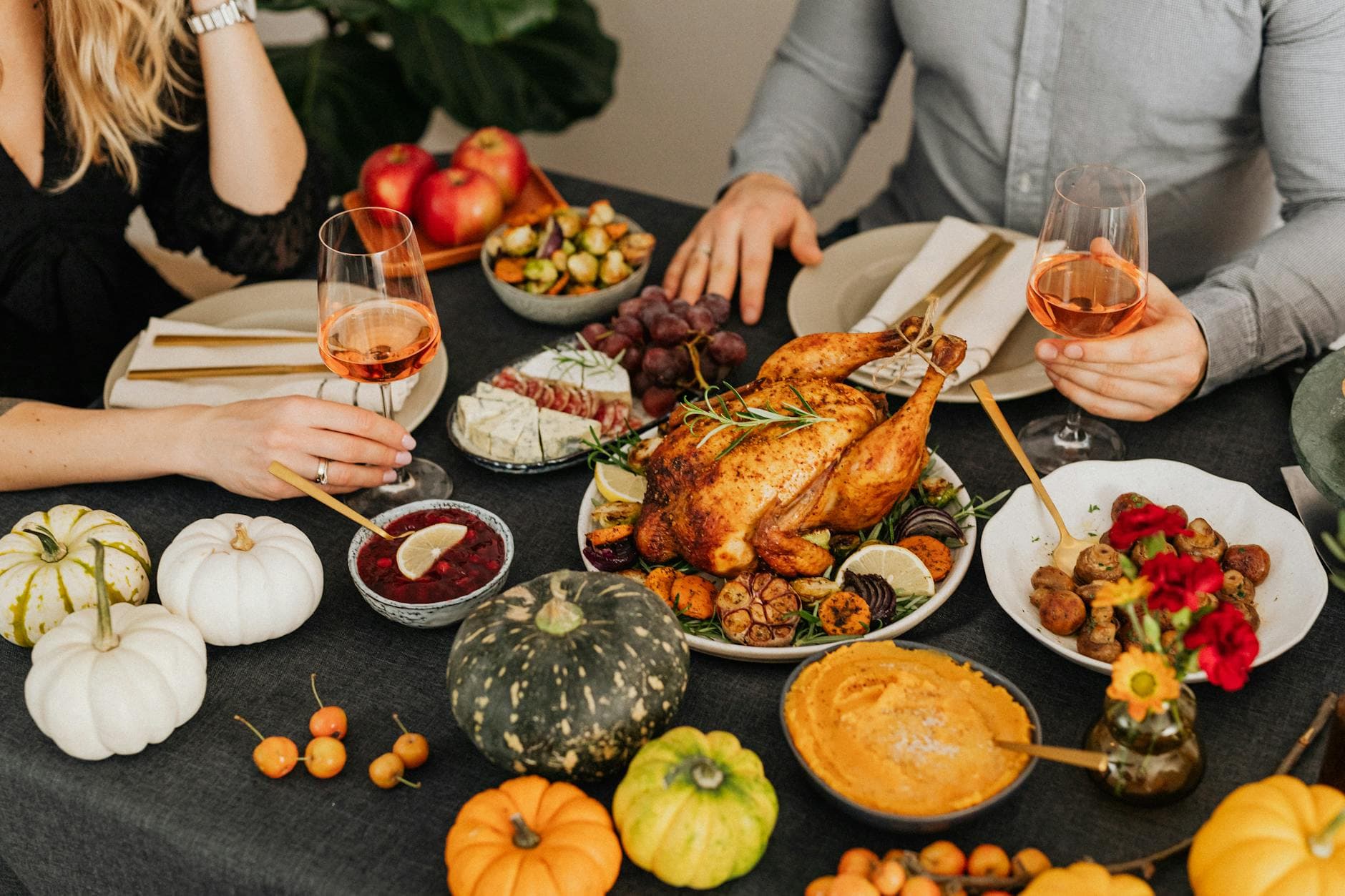
The Thanksgiving Wine Playbook
The hardest meal in America to pair — sweet, savory, umami, and pie, all on the same plate. Here is how to win it.

The best wines for Thanksgiving are versatile bottles with bright acidity that bridge across multiple dishes rather than pair perfectly with any one. Beaujolais Cru (Morgon, Fleurie) is the sommelier's secret weapon — bright acidity, low tannins, handles both turkey meats and stuffing. Off-dry Riesling bridges the cranberry sauce problem. Sparkling wine resets your palate between bites. Plan one bottle per two adults, buy 30% more than you think you need, and serve even the reds slightly chilled.
The problem
Thanksgiving is the hardest meal in America to pair wine with because no other dinner puts sweet, savory, umami, bitter, and creamy on the same plate at the same time. Sweet potatoes with marshmallow. Cranberry sauce. Turkey — both white and dark meat. Herbed stuffing. Green bean casserole. Gravy over everything. And then pie. There is no single wine that matches all of it. The strategy is not perfect pairing — it is versatile wines with bright acidity that bridge across dishes rather than surrender to any one.
The turkey itself
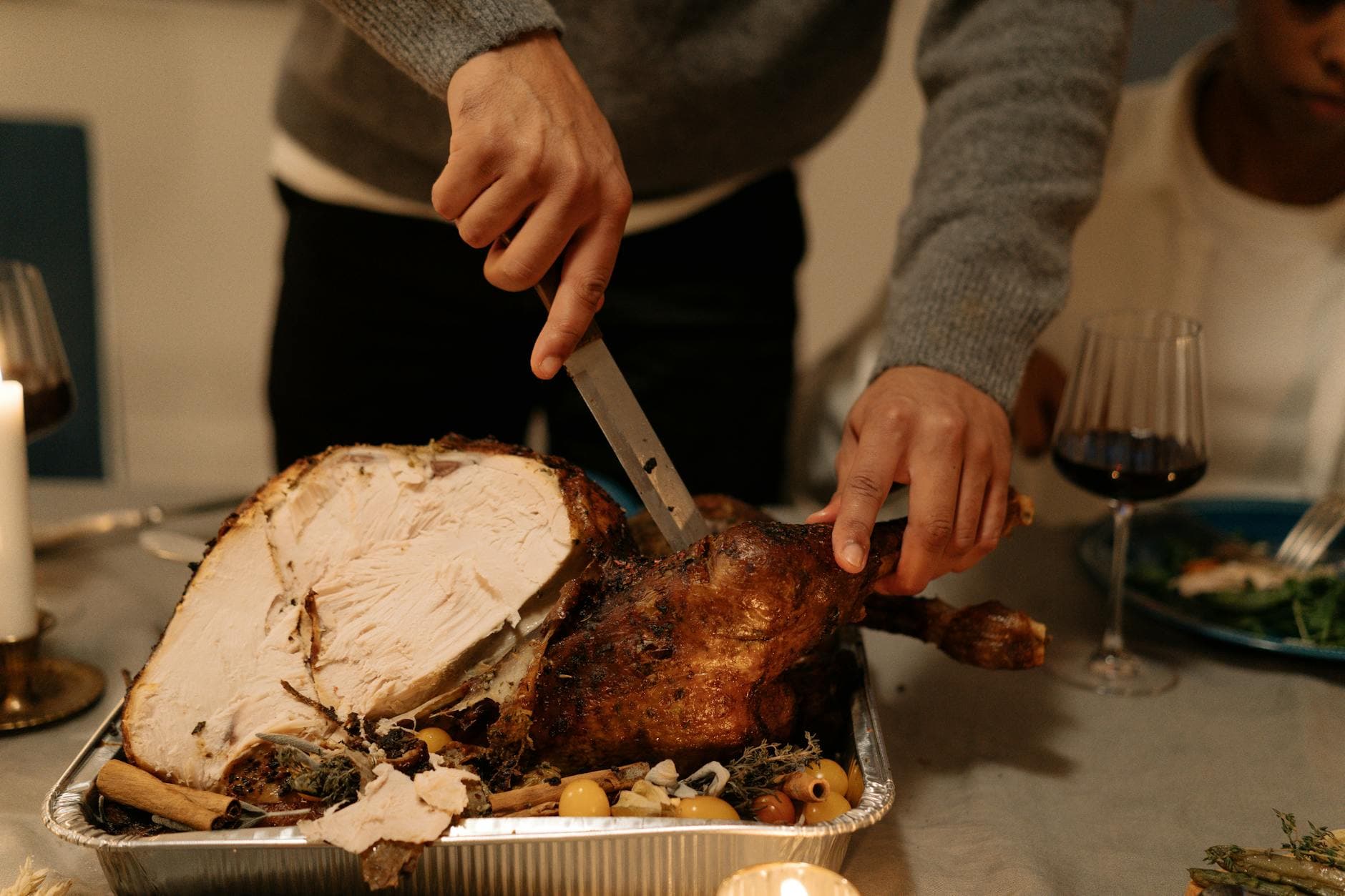
White meat is lean, mild, and needs a wine that will not overwhelm it — lightly oaked Chardonnay, Chenin Blanc, Pinot Gris. Dark meat is richer, fattier, more gamey. It wants Pinot Noir, Gamay from a Beaujolais Cru, lighter Syrah. The whole bird wants both, which is why I keep coming back to Beaujolais as the single best Thanksgiving red. Bright enough for the breast, structured enough for the thigh.
The cranberry problem
Cranberry sauce is the trickiest element on the plate. That combination of sweetness and tartness makes most dry wines taste thin and bitter. The solution is off-dry Riesling — its residual sugar matches the cranberry sweetness while its acid matches the tartness. A Dr. Loosen Blue Slate Kabinett from the Mosel ($18) handles this beautifully. If someone at your table complains about the Riesling, give them a minute. It will win them over by the second bite.
The Swiss Army knife wines
These are the bottles that handle 70% or more of the table. If you buy nothing else, buy these.
- Beaujolais Cru (Morgon, Fleurie, Moulin-à-Vent) — bright acidity, low-moderate tannins, red fruit. Handles turkey, stuffing, and even cranberry proximity. Marcel Lapierre Morgon ($28) is the gold standard. Louis Jadot Beaujolais-Villages ($13) is the budget version that still delivers.
- Off-dry Riesling (Kabinett level) — bridges sweet and savory like nothing else. The slight sweetness handles cranberry and sweet potato. The acid cuts through gravy and butter. $15-25.
- Sparkling wine — high acidity plus bubbles equals a palate cleanser between every bite. It works with everything because it resets your palate rather than trying to match anything. Gruet Brut ($15) is methode champenoise from New Mexico and it is absurdly good for the price.
The rest of the plate
- Stuffing — herbs plus bread plus butter. Rhône blends, Pinot Noir, and Chardonnay all work. Herbal wines mirror the sage and thyme.
- Sweet potatoes with marshmallow — this is practically a dessert on the dinner plate. Off-dry Riesling or Gewürztraminer. Or accept that this dish fights most wines and enjoy it on its own.
- Green bean casserole — cream plus mushroom plus fried onions is an umami bomb. Pinot Noir handles umami well.
- Pumpkin pie — tawny Port, late-harvest Riesling, Moscato d'Asti. Or honestly, bourbon. Nobody is judging you at this point in the meal.
The logistics
Quantity math: plan for one bottle per two adults over a three to four hour Thanksgiving. For 12 adults, that is six bottles minimum. Buy eight. Leftovers keep and you will be thankful — pun unavoidable — that you are not scrambling to open something from the back of the pantry at 9 PM.
Buy more white and rosé than you think you need. Americans default to red at holidays, but white and sparkling actually perform better across this meal. And serve wines slightly chilled — even the reds. A Beaujolais at 58 degrees is more refreshing alongside heavy food than one at room temperature. Skip the oaky, buttery Chardonnay. It fights the cranberry sauce. If you want Chardonnay, go unoaked — Chablis is the move.
One more thing. Thanksgiving is not the night to open something precious. The chaos of the table, the competing flavors, the uncle who puts ice in his glass — this is not Brunello weather. Save the serious bottles for a quiet dinner in December. Thanksgiving is for wines that are generous, forgiving, and good enough to drink without thinking about them too hard. That is what makes the meal work.
A properly stocked cellar means you never scramble for bottles before a dinner party. We design storage that organizes your collection by occasion, not just by region.
Book Consultation