Is Wine Still a Good Investment in 2026? A Straight Answer.
The 2022 peak is gone. The 2026 entry point is real. Here's what's worth holding, what to avoid, and why storage is 80% of the trade.

Wine remains a legitimate alternative asset for patient capital, but 2026 is not 2018. Top Burgundy corrected roughly 30% from its 2022 peak, Bordeaux is flat, and Champagne is cooling. The smart play is buying quality producers at post-correction prices and holding 10 years. The dumb play is chasing whatever the index just spiked.
What actually happened, 2018 to now
From 2018 to mid-2022, the fine wine market ran on the same fuel as everything else. Cheap money, retail speculation, and a pandemic-era lifestyle reset that pushed high-net-worth households toward tangible assets. Top Burgundy roughly tripled. A handful of DRC and Leroy vintages broke records nobody thought possible. Then rates climbed, liquidity dried up, and the speculative edge of the market sold off first.
By early 2026 the correction has mostly run its course on classical regions. Prices now sit roughly where they were in mid-2020. Meaning a real buying window for collectors with patient capital and a storage plan.
Where the 2026 market actually sits
Burgundy is off 25–35% from peak depending on producer and vintage. Top domaines (DRC, Leroy, Roumier, Rousseau) corrected less than the tier below. Mid-tier village wines corrected more. This is the best entry point for serious Burgundy buyers in a decade.
Bordeaux has been mostly flat for two years. Primeurs campaigns have been muted. Classed growths from strong vintages. 2018, 2019, 2020. Are trading at reasonable discounts to peak. The 2023 and 2024 vintages are being cautiously priced by châteaux, which is unusual and collector-friendly.
Champagne is cooling after the grower-Champagne hype cycle. Big houses are still liquid; small growers are correcting harder. The best opportunity is probably in cellared prestige cuvées from 2008 through 2015 that patient sellers are willing to move.
Italy is the quieter story. Barolo and Brunello had less speculative runup and less correction. Super Tuscans (Sassicaia, Tignanello, Ornellaia) have been steady. If you want lower volatility with reasonable appreciation, this is where patient capital parks.
The three categories actually worth holding
Classical Bordeaux, top vintages
2009, 2010, 2015, 2016, 2018, 2019, 2020 from classed growths. Boring, liquid, and historically the most predictable appreciation curve in fine wine. Plan to hold 10–15 years from release. The liquidity of this category is the feature. You can exit into a deep auction market almost any week of the year.
Blue-chip Burgundy
DRC, Leroy, Rousseau, Roumier, Dugat, Mugnier, Lafon. Buy less of it, pay more per bottle, hold longer. The 2023–2025 correction has opened the door, but the upside window will not stay open forever.
Prestige Champagne with cellar age
Krug Vintage, Dom Pérignon P2, Cristal, Salon. Buying these ten years after release is one of the cleanest trades in wine. You get bottles that are drinking better than they sold and have a second price peak ahead of them.
What to avoid
- Anything the Liv-ex index just spiked. By the time it moves, retail is late.
- Wine funds charging 2-and-20 on an asset class that doesn't need active management.
- NFT-backed wine schemes of any kind.
- Cheaper Bordeaux you can't name in five years.
- Any producer whose pricing history is under 10 years. The math only works on proven curves.
Why storage is 80% of the investment
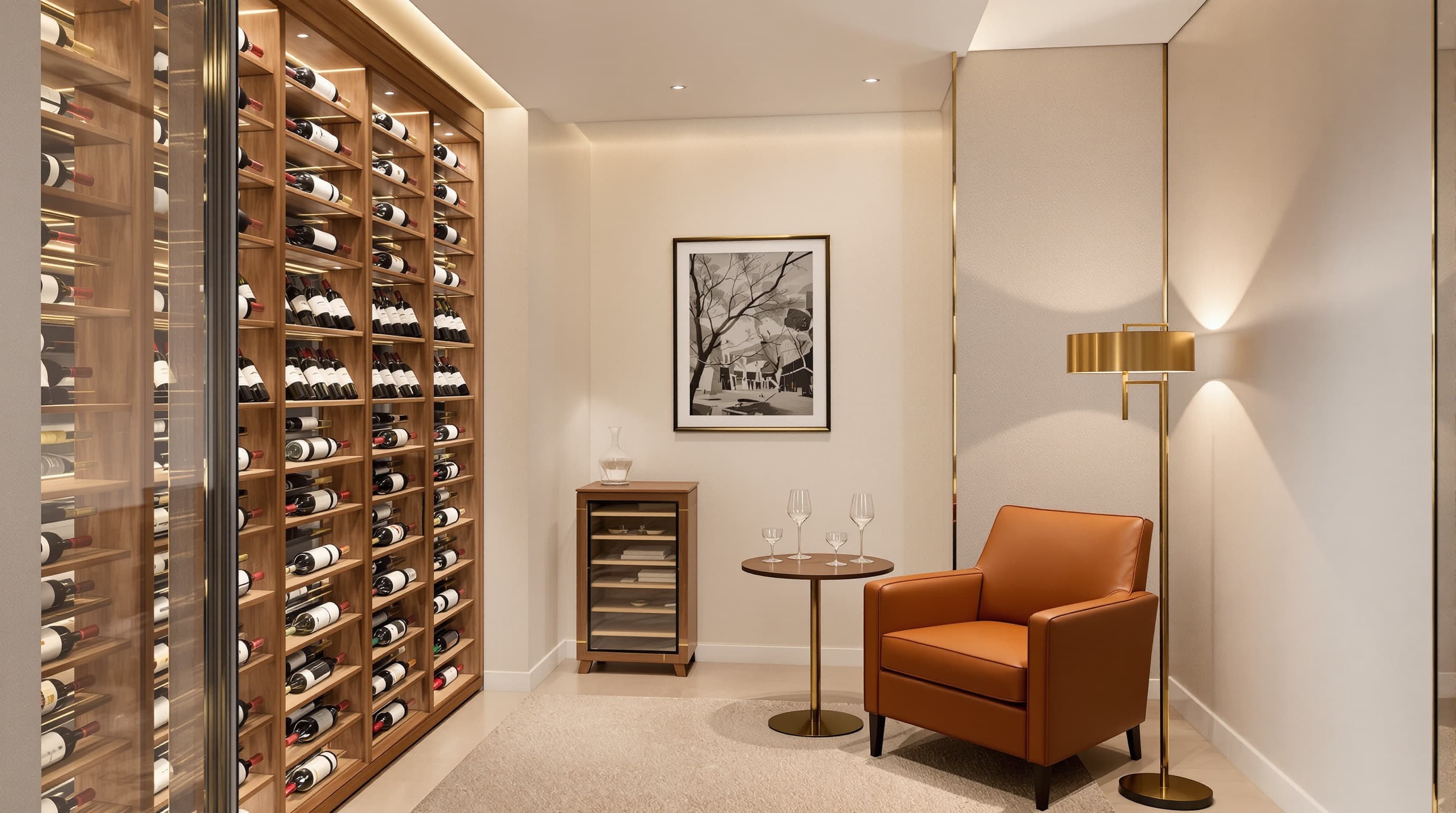
A single summer of bad storage can destroy a decade of patient holding. The wine market prices provenance heavily. Bottles sold with verified professional storage consistently fetch 15–30% more than identical bottles labeled 'stored in a home cellar.' If you are treating wine as an asset, the cellar is not a luxury. It is the safe.
A $1,500 bottle stored at an uncontrolled 68°F is not a $1,500 bottle anymore after year three. This is where the honest crossover happens between 'I like wine' and 'I am seriously investing.' If you cannot walk a prospective buyer through your cellar's temperature log and UV history, you are going to take a provenance discount on every bottle you sell.
Realistic expectations
Historical fine-wine annualized returns on the best-performing category. Blue-chip Bordeaux and Burgundy held through full vintage cycles. Sit in the neighborhood of 8–12% before storage costs. That is comparable to equities with less correlation but worse liquidity. Wine is not a get-rich asset. It is a wealth-preservation asset that happens to also be drinkable, which is the only truly irreplaceable feature in an investment class.
The short version
2026 is a better year to start a serious wine collection than any year since 2016. The correction has done your homework for you. Buy quality. Buy patient. Store it like it matters. Hold longer than you think you should. If you want the beginner playbook before you scale into investment-grade bottles, start with our beginner's guide to collecting wine.
If you are buying bottles with a 10-year horizon, the cellar is half the investment. Design a climate-controlled home for your collection with the Bijou Design Studio, or book a consult for a full build.
Design Your Cellar